Product strategy, design & AI
What we do, and how far we take it.
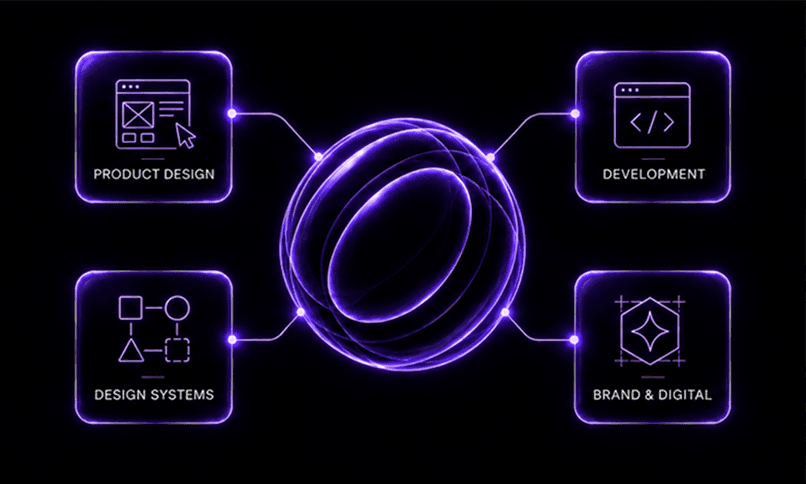
Four core capabilities for complex products, and three connected ones for the brand, site and growth work around them. Most engagements start with one and grow from there.
Core capabilities
Product Strategy
We start before the interface. Business goals, user needs and system constraints get mapped into one direction the whole team can build against.
Explore product strategy- Product discovery
- UX research
- Workflow mapping
- Information architecture
- Roadmap definition
- Success metrics
Enterprise Product Design
Interface systems for products that do not get simpler over time: enterprise dashboards, complex flows, and the mobile apps that sit alongside them.
Explore enterprise product design- Website design
- Mobile app design
- Enterprise dashboards
- Design QA in build
- Interactive prototypes
- Accessibility review
Design Systems
The layer underneath the screens. Tokens, components and governance shipped into your repository, versioned and documented, so the product stays coherent after we leave.
Explore design systems- Design system audit
- Token architecture
- Component library
- Governance model
- Multi-brand theming
- Accessibility integration
AI Experiences & Automation
AI only helps when people trust it. We design the interface layer that makes automated decisions legible, correctable and worth relying on.
Explore AI & automation- AI assistants
- Intelligent workflows
- Process automation
- AI-powered products
- Model output UX
- Human-in-the-loop design
Connected capabilities, scoped on their own
Brand Identity
A mark is the smallest part of it. The work is the system around the mark: colour, type, and the rules that let somebody who was not in the room apply it correctly.
Explore brand identity- Logo and identity system
- Colour and typography
- Brand guidelines
- Print and collateral
- Verbal identity
- Application across touchpoints
Web Design & Development
Marketing sites and product websites, designed and built by the same people, so what was drawn is what ships, and the system underneath it survives the first content change.
Explore web design and development- Marketing site design
- Front-end build
- Responsive and accessible
- Performance budgets
- CMS and content architecture
- Analytics and measurement
Digital Marketing
Search, paid media, email and social, run by the same studio that designed the pages the traffic lands on, so the campaign and the page it points at are never working against each other.
Explore digital marketing- SEO and local search
- Paid search and social
- Landing pages
- Email marketing
- Content and social
- Analytics and reporting
Systems designed for
real-world complexity.
We partner with ambitious teams to design and build digital products, platforms and experiences that drive real impact.
Self-initiated concept
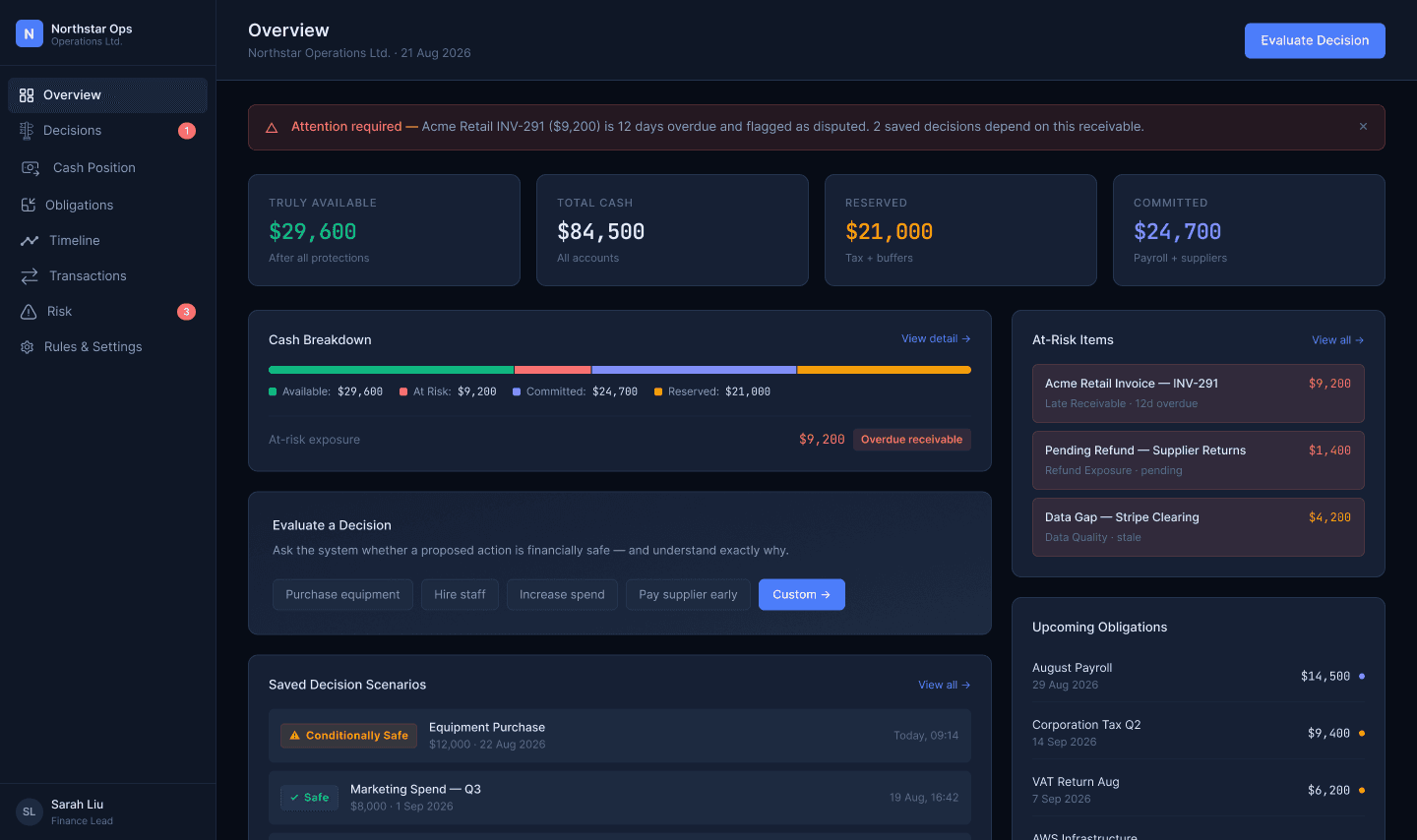
FINTECHFinance teamsTrue Available Cash
A decision layer that tells finance teams what they can actually spend, and why.
View case study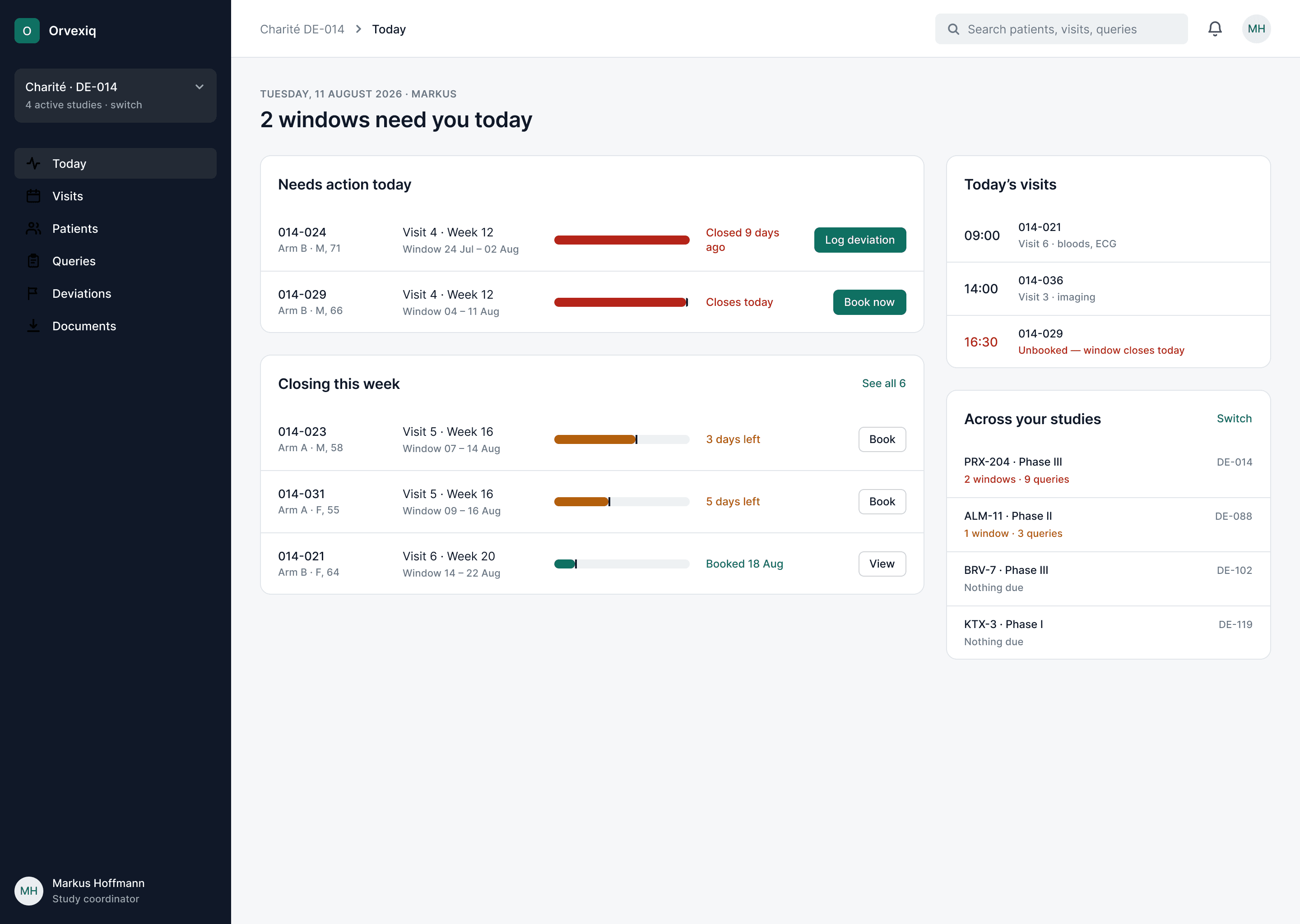
Self-initiated concept
HEALTHCAREClinical researchTrial coordination console
Making a missed visit window visible while it can still be prevented.
View case study
Before you send
the first message.
If something here is not answered, ask it directly. We would rather have the conversation than have you guess.
01How long does a design system take?
Between six weeks and four months, depending on how much product already exists. A greenfield system for one product is fast. Extracting a system from four years of accumulated screens is not: most of that time goes into deciding what to keep.
02Do you work with our engineers, or hand over and leave?
We stay through build. Design thrown over a wall arrives as something else. In practice that means tokens and components shipped into your repository, not a Figma file your team drifts from within a quarter.
03What does an engagement cost?
It depends on scope and length, and we would rather scope it properly than quote a range that means nothing. Tell us the problem and we will come back with an approach and a number.
04What is the smallest project you take?
A four to six week discovery, or a design system audit. Below that we are probably the wrong shape. You would mostly be paying for onboarding.
05Do you only work in fintech?
No. Most of our work has been in regulated or operationally complex products, lending, logistics, treasury, warehouse, because that is where a design system earns its keep. The constraints matter more than the industry.
06What is the difference between a design system and a component library?
A component library is the components. A design system is those components plus the tokens underneath them, the rules for adding new ones, and documentation good enough that someone who was not there still makes the right decision.
07Can you work with our existing design system?
Usually. We audit what is there first. Often the problem is not the components. It is that nothing governs how they get used.
08Do you sign NDAs?
Yes. Several projects on this site are described without client names for exactly that reason.
Have something complex
to build?
Tell us the problem. We will come back with how we would approach it, not a pitch deck.